Nisbets: The Real Story Behind the UK’s Top Catering Supplier
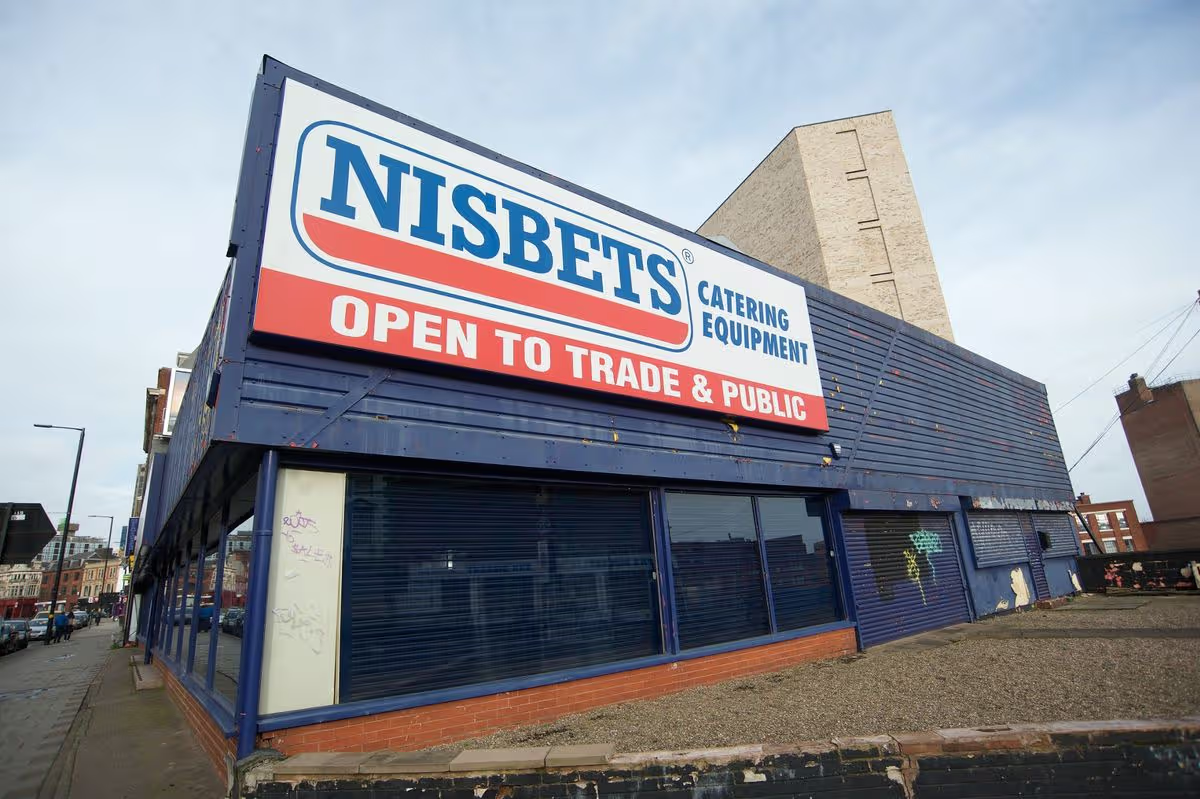
Walk into almost any commercial kitchen in Britain and there’s a decent chance something on the shelves came from Nisbets. It’s one of those companies that quietly became essential to an entire industry without most diners ever hearing the name. But behind the blue-and-white branding sits a genuinely interesting business story — a family firm that grew into a multinational, then sold most of itself to a FTSE 100 group in a deal worth well over half a billion pounds.
If you’ve searched “Nisbets” wanting to know what the company actually does, who owns it now, and whether it’s still worth trusting for kitchen equipment, this covers all of it — including a few things most write-ups skip over entirely.
What Nisbets Actually Does
At its core, <cite index=”7-1″>Nisbets is a catering equipment supplier serving restaurants, hotels and bars across the UK</cite>, though that undersells the scale of the operation. The company doesn’t just sell a handful of fryers and mixing bowls — it stocks <cite index=”7-1″>a comprehensive range of professional catering equipment, from appliances and machines through to eco-friendly disposables and supplies</cite>. Depending on which market you’re shopping in, the catalogue runs anywhere from roughly 30,000 to over 43,000 individual products, covering everything from commercial ovens and refrigeration units down to chef’s whites and disposable napkins.
What most articles gloss over is that Nisbets isn’t purely a UK operation anymore. <cite index=”3-1″>The company runs operations across the UK, Ireland, the Netherlands, Belgium, Germany and France, with additional subsidiaries in India, China, Australia and New Zealand</cite>. That footprint matters because it explains why Nisbets can compete on price and delivery speed in ways smaller regional suppliers simply can’t — buying power at that scale changes everything about margins and stock availability.
A meaningful chunk of what Nisbets sells is also its own-brand product, developed and manufactured to be sold exclusively through its own channels rather than sourced from third-party brands. That’s a deliberate strategy, and it’s part of why the company can undercut rivals on comparable items while still turning a profit.
Who Founded Nisbets — And Who Owns It Now
<cite index=”6-1″>Nisbets was founded in 1983 by Andrew Nisbet</cite>, and the company has been headquartered ever since near <cite index=”6-1″>Avonmouth, Bristol</cite>. For four decades it stayed a family-controlled business, growing steadily from a single operation into the multinational it is today.
That changed in 2024. Having looked at this closely, the ownership shift is arguably the single biggest thing that’s happened to the company in its entire history. <cite index=”6-1″>On 26 February 2024, the Nisbet family agreed to sell an 80% stake in the business to Bunzl for £339 million, in a deal that valued the whole company at over £500 million</cite>. Bunzl is a large, publicly listed distribution group with interests across multiple industries, and the acquisition folded Nisbets into that broader corporate structure while — notably — leaving the Nisbets brand and day-to-day operations largely intact.
This is the detail a lot of people searching the company name actually want to know: no, Nisbets hasn’t disappeared or been rebranded. It still trades under its own name, still runs its own website and stores, and customers are unlikely to notice much difference on the surface. What’s changed is who sits above the business on the ownership chart. techware
The National Catering Equipment Centre and Company Scale
One thing that genuinely sets Nisbets apart from most online-only equipment retailers is that it has a physical flagship. The <cite index=”6-1″>National Catering Equipment Centre, or NCEC, opened as the company’s flagship store and showroom and is described as the largest of its kind in the UK</cite>. It’s based in Bristol, close to head office, and functions less like a shop and more like a working exhibition space where hospitality operators can see, touch and test equipment before committing to a purchase — something that matters a great deal when you’re spending thousands of pounds on a commercial fryer or walk-in fridge.
The company employs roughly 1,800 people across its various markets, and it isn’t just retail — it has moved into services too. In 2022, Nisbets made three acquisitions in fairly quick succession: UK Engineers, a business specialising in servicing and repairing catering equipment; Jongor Hire, which supplies temporary catering equipment and furniture for events; and Beaumont, a long-established manufacturer and supplier of barware. That trio of deals tells you something about the direction the company was heading even before Bunzl came along — Nisbets was already trying to become less of a pure retailer and more of a full-service partner to the hospitality trade, covering supply, repair and short-term hire under one roof.
Nisbets Live and What’s New for 2026
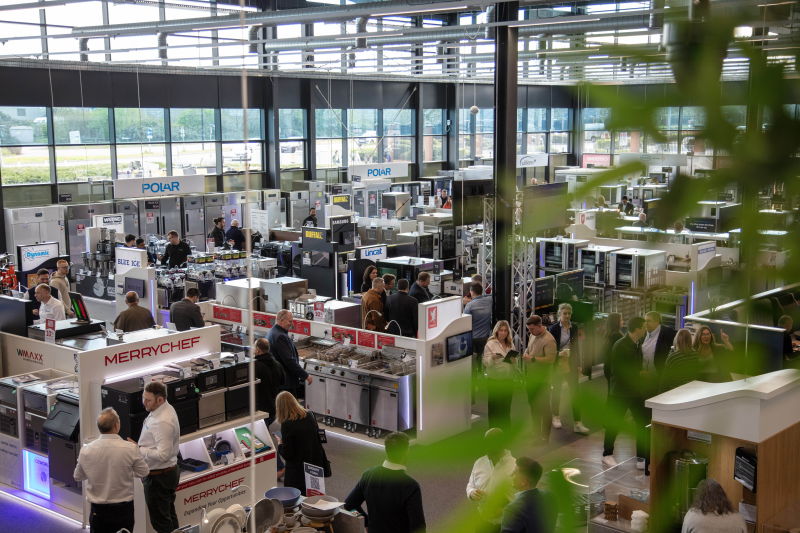
This is where a lot of coverage of Nisbets goes stale fast, because the company runs an active annual events calendar that changes year to year. <cite index=”4-1″>Nisbets Live is held each year at the NCEC in Bristol and brings hospitality operators from the South West region and beyond together to network, see new equipment and catch up on industry trends</cite>. For 2026, <cite index=”4-1″>the event’s theme centres on supporting the hospitality industry, reflecting ongoing pressure from rising costs, staffing shortages and general trading concerns across the sector</cite>. Mark Conron, the group’s head of customer communications, has been vocal about wanting the show to give operators practical tools rather than just a product showcase.
Visitors to the 2026 show can expect live product demonstrations, and <cite index=”4-1″>Mark Veale, Nisbets’ executive chef and the NCEC’s general manager, is running sessions in a “Digital Kitchen” exploring current food and drink trends alongside tips for controlling costs and building higher-margin menus</cite>. A notable thread running through this year’s demos ties into the 2026 Football World Cup, <cite index=”4-1″>with Veale using Buffalo equipment to build high-profit menus inspired by American, Canadian and Mexican cuisine</cite> — a sensible bit of opportunism given all three countries are co-hosting the tournament and pubs and restaurants will be looking to capitalise on the crowds.
Separately, the company has also been running commercial promotions this year. <cite index=”5-1″>In July 2026, Nisbets launched its first-ever “Rewards Week,” cutting prices by up to 50% on products from more than 30 brands over a week-long campaign</cite>. It’s a fairly aggressive discount push by the company’s usual standards, and it lines up with a broader pattern of Nisbets leaning harder into promotional events since the Bunzl acquisition gave it more marketing firepower.
Is Nisbets Actually Reliable? Addressing the Reviews
Here’s what a lot of comparison sites won’t tell you plainly: Nisbets’ reputation is good but not spotless, and pretending otherwise would be dishonest. Customer review aggregation for the Irish arm of the business currently sits around 4 out of 5, which is solid without being exceptional. The consistent praise centres on product range, competitive commercial pricing and generally fast next-day delivery. The consistent complaints, where they appear, tend to cluster around two specific issues — items arriving damaged in transit, and a returns process that some customers describe as more cumbersome than they’d like for a company this size.
None of that is unusual for a business shipping heavy, often fragile commercial kitchen equipment at volume — breakages in transit are close to unavoidable at scale. But it’s worth knowing going in, especially if you’re ordering something large or fragile, so you can factor delivery insurance or careful unboxing checks into your plans rather than being caught off guard.
Frequently Asked Questions
Is Nisbets a British company? Yes. It was founded in Bristol in 1983 and is still headquartered there, though it now operates across several European and international markets.
Who owns Nisbets now? Bunzl, a publicly listed distribution group, acquired an 80% stake from the Nisbet family in February 2024 in a deal valuing the company above £500 million. The remaining stake stayed with the family and existing shareholders.
Does Nisbets sell to the general public, or only businesses? Both. While its core customer base is hospitality businesses — restaurants, hotels, bars, schools and colleges — the online store is open to members of the public too.
What is the NCEC? It’s the National Catering Equipment Centre, Nisbets’ flagship showroom and store in Bristol, widely described as the largest facility of its kind in the UK.
Is Nisbets more expensive than smaller catering suppliers? Not typically. Its scale and own-brand manufacturing generally let it undercut smaller regional suppliers on comparable commercial-grade equipment, though it’s always worth comparing specific items.
Has the Bunzl takeover changed how Nisbets operates day to day? Not in any way that’s visible to customers so far. The brand, website, stores and product range have all continued largely as before under the new ownership structure.
The Bottom Line
Nisbets isn’t a flashy consumer brand, and it was never trying to be one — it built its reputation quietly, one commercial kitchen at a time, over more than forty years. What’s changed recently isn’t the product or the service, it’s the ownership sitting behind the name, and the sheer scale of investment now backing the business through Bunzl. For anyone in the hospitality trade weighing up where to source equipment, that combination of established reliability and newer corporate backing is, if anything, a reason for more confidence rather than less. Just go in with realistic expectations around delivery for bulkier items, and Nisbets remains exactly what its history suggests: one of the most dependable names in UK catering supply.